
When it comes to maintenance and industrial construction, a fastener’s strength goes beyond just the size and tensile capacity. It also considers how long it can withstand corrosion within the given environment. Depending on the factors such as moisture, chemicals, salts, acids, humidity, or outdoor weather for years, the fastener will have varying levels of corrosion resistance, which plays a huge role in determining its strength.
The base material of industrial fasteners is not sufficient to protect them from corrosion; that is why their coat or plating is significant. Industrial fasteners are not only equipped with base material. The coating and plating are what make them serve their purpose. Moreover, choosing the wrong coating can lead to severe problems such as corrosive bolts, jammed nuts, leaking seals, and disastrous damages to piping systems and structural frameworks.
Why Corrosion Resistance in Fasteners is Non-Negotiable for Industries
The fasteners of an industrial setup are its most overlooked components. Fasteners may be small and inexpensive in nature. However, they are one of the most important industrial components that hold everything together. Fasteners are omnipresent as they are used in pipelines, structural supports, various pieces of equipment, tanks, and even in cable trays. All of these components rely on fasteners.
Corroded fasteners can lead to the mechanical strength of a joint getting compromised which is far worse than mere corrosion. A nut that has rusted renders a bolt useless; losing parts in the process makes functions like maintenance extremely challenging. Even worse is the consequence of broken fasteners; corroded fasteners snapping under stress is exceedingly perilous.
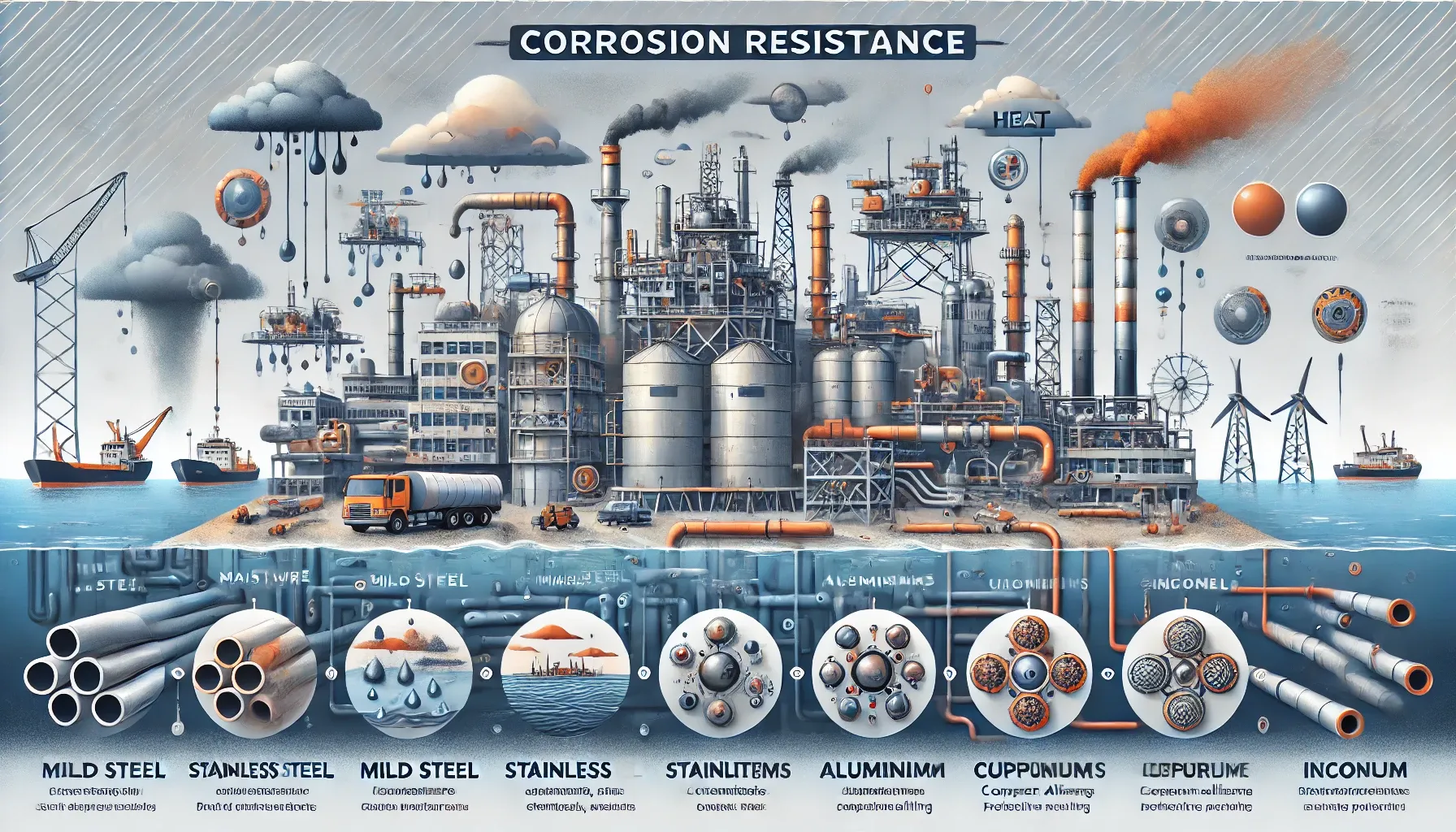
Fasteners can bear different forms of attacks like a high humidity environment, coastal body of water, places like chemical plants, outdoor cooling units, and even underground pipelines. Each environment requires a specific form of corrosion resistance and these conditions are effective in their respective places.
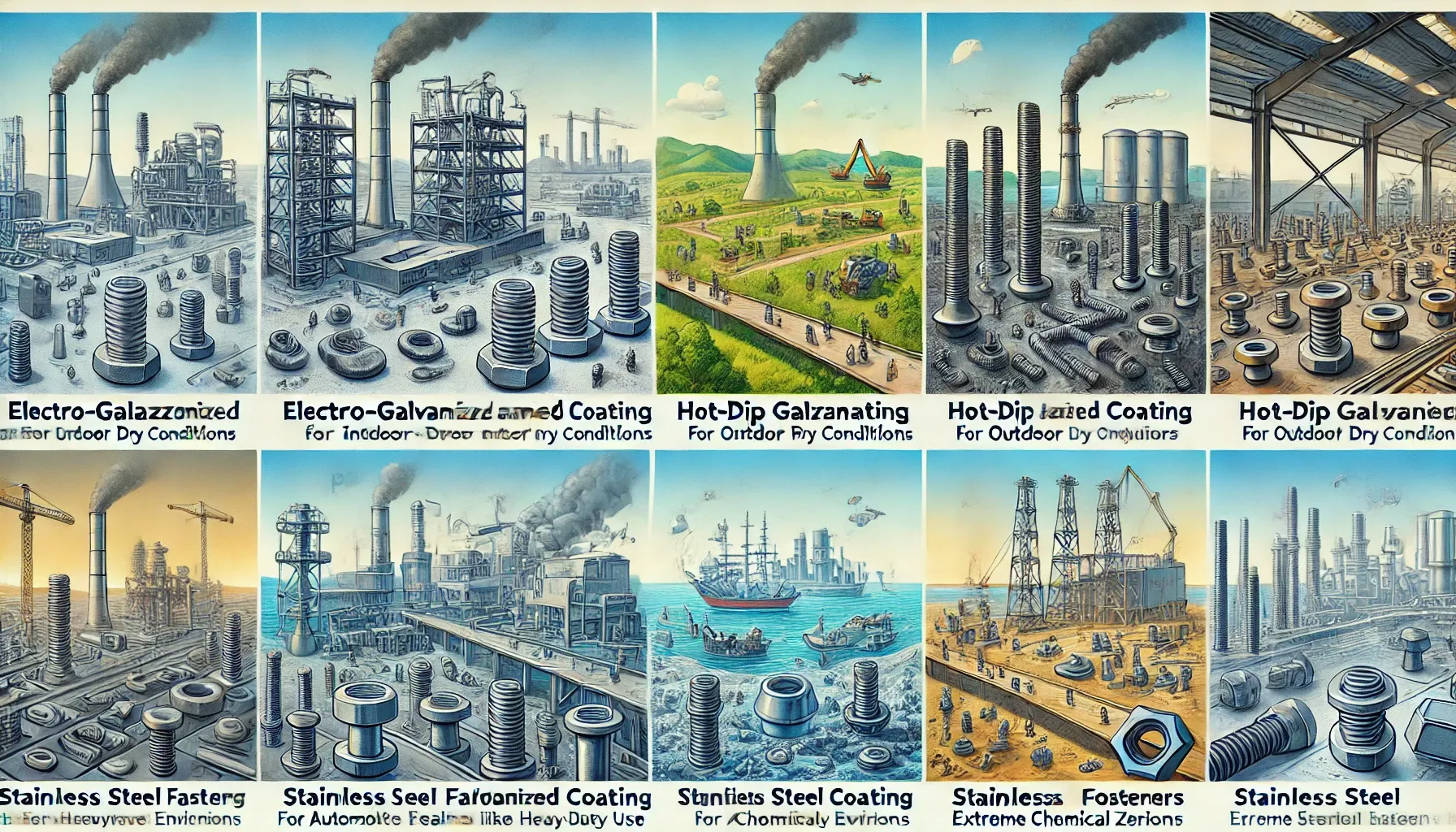
Electro-Galvanized Coating — The Basic Layer for Indoor Protection
Electro-galvanizing is the simplest form of fastener corrosion protection. It consists of applying a thin layer of zinc onto the fastener’s surface using electroplating. The fastener is polished and shiny, and with some resistance to dry, indoor environments with low moisture and chemical assaults.
But the coating isn’t very effective beyond places such as indoor machinery, dry warehouses, or enclosed electrical panels. With exposure to outside conditions such as rain and high humidity, the thin zinc layer is stripped away at an alarming rate, and in coastal or chemical environments, electro-galvanized fasteners have a heartbreaking lack of corrosion resistance.
Hot-Dip Galvanized Coating — The Industry Favourite for Outdoor & Heavy Duty Use
Compared to electro-galvanizing, hot-dip galvanizing is a beast of a process. In this procedure, the fasteners are coated with molten zinc in boiling hot metal baths, creating a much thicker, rougher protective layer. Although hot-dip galvanized coatings have a dull grey colour, their performance is unmatched.
Hot-dip galvanized fasteners are the first choice for outdoor structures, transmission towers, industrial sheds, pipelines, cable trays, and plant structures exposed to rain, dust, and semi-corrosive conditions.
The usable lifespan of these coatings due to corrosion posited on different environmental conditions is from 15-30 years. While these coatings can withstand typical weather, they are fundamentally inefficient without further augmenting protection in highly corrosive chemical areas and coastally salty regions.
Zinc Flake Coating — The Smart Solution for Automotive and Coastal Exposure
Zinc flake coatings, otherwise known as Geomet or Dacromet, are phenomena that received a lot of attention in the automotive and offshore industry. This coating is applied to bolts requiring potent protection from corrosion, while ensuring that the dimensions of the bolt body remain unchanged, which is critical for assembly threads.
Zinc flake coated fasteners are best suited for coastal regions as well as outdoor and automotive equipment which require precise control over salt spray exposure without compromising salt spray endurance.
This type of coating has a resistance to salt spray for up to 1000 hours, sometimes even more, making it ideal for those who value appearance and functionality.
Stainless Steel Fasteners — Built-in Corrosion Resistance But Costly
In the most corrosive environments, which include: chemical plants, pharmaceutical cleanrooms, food industries and marine structures, stainless steel fasteners are the clear winner.
SS304 and SS316 are examples of grades that provide self-sustaining corrosion resistance and do not require any external coating. However, they contain alloys that enhance their performance. SS316 does exceptionally well with chlorides, seawater, and aggressive chemicals due to the molybdenum content it contains.
Quote from the purchase document: “Stainless steel fasteners have 4 to 6 times higher cost than standard coated carbon steel fasteners.” Just like other things, the selection of these needs to be justified with the criticality, environment severity, and life-cycle cost comparison.
PTFE or Xylan Coated Fasteners — The Specialist for Extreme Chemical Zones
Refineries, chemical plants, offshore rigs, and nuclear plants are some of the most aggressive environments and PTFE or Xylan coated fasteners are perfect for these. This coating does not only afford protection against corrosion but also lubricates the components making disassembly easy even decades after exposure.
These coatings withstand a broader spectrum of chemicals, acids, and solvents than other coatings. Hot dip galvanized or zinc coated fasteners last for a few months, but these withstand the conditions for much longer.
Conclusion
Corrosion resistance in fasteners, especially in industrial projects, isn’t an extra advantage, rather a dire need. Every site condition needs a specific coating approach because a one-size-fits all type of approach does not work with different environments.
We, at Indusroof, offer a wide variety of fasteners such as hot-dip galvanized, electro-galvanized, stainless steel, zinc flake coated, PTFE coated, and others; all of which are resistant to corrosion. This guarantees that regardless of your site’s conditions, our fasteners will remain dependable, powerful, and easy to maintain for many years.
Validate your login