
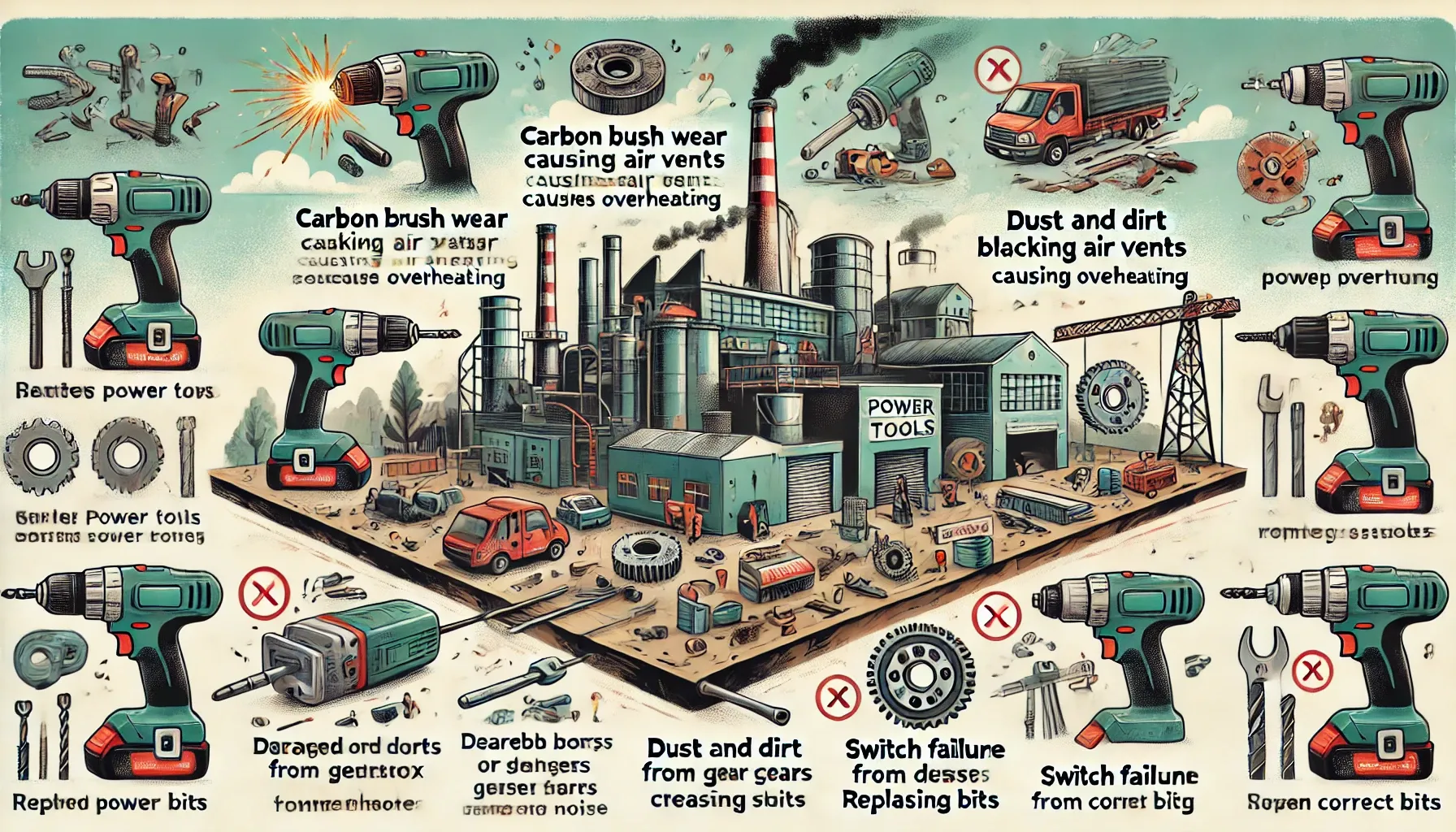
Real power tools save time in every drill, cut, grind, and even fastening activity on industrial sites and workshops, as well as, in maintenance departments. However, unlike the myths that surround power tools, they are also susceptible to failure - sometimes in the middle of an urgent task. The reality of the situation is that in 80% of cases, the failure of power tools lies in its handling, maintenance, or basic wear and tear, rather than poor manufacturing. It is critical for a technician to understand the primary reasons that lead to the failure of power tools along with their easy fixing techniques because understanding the root cause could very well be the difference between success and failure on-site.
The Most Common Killer — Carbon Brush Wear in Electric Tools
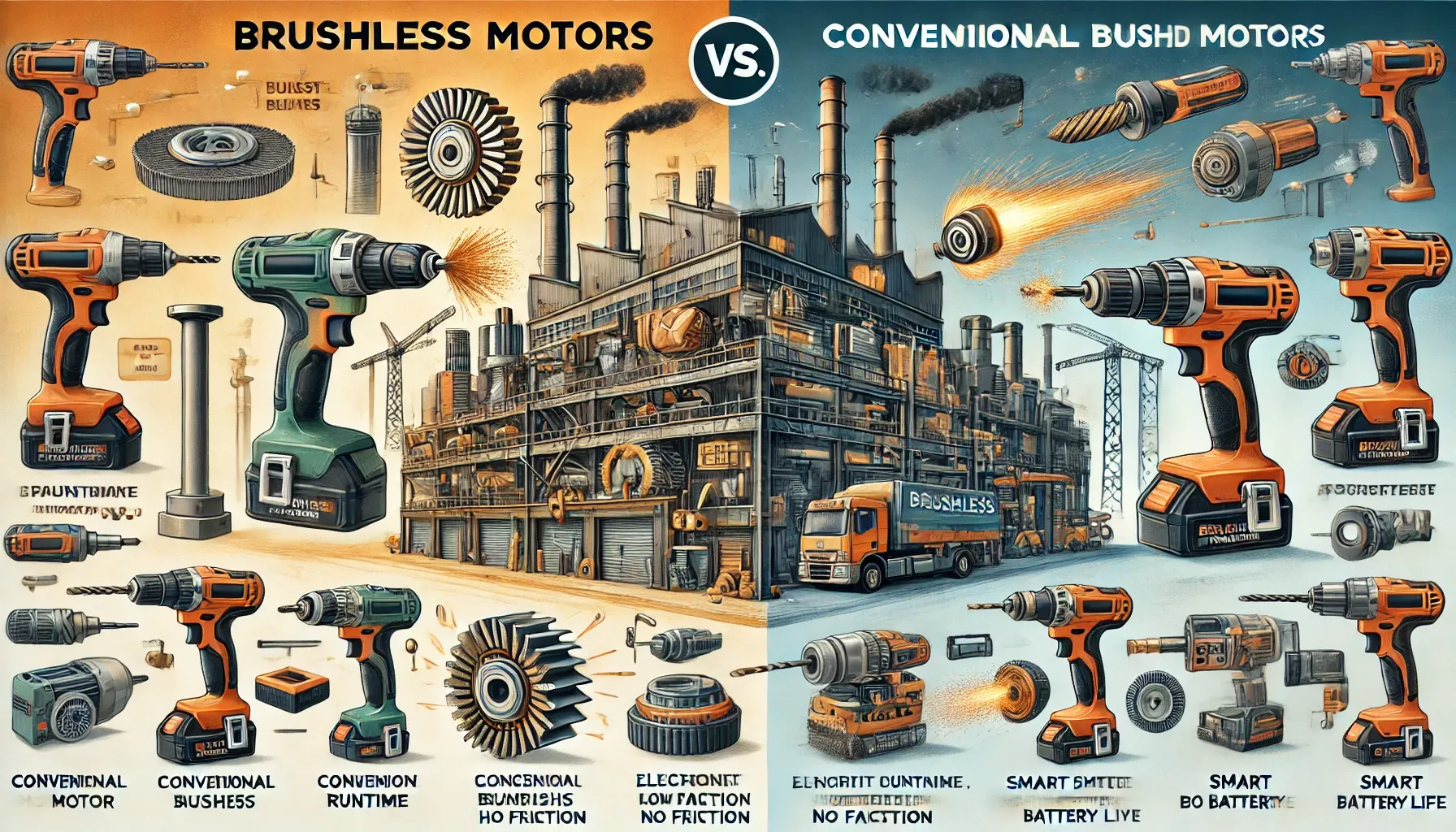
The culprit behind sudden power tool failure is worn out carbon brushes. Considering most electric power tools like drills, grinders and cutters use brushed motors, the rotating armature needs electrical contact which is maintained by carbon brushes housed in the motor. Carbon brushes are for electric motors what rotors are for engines and just as an engine, carbon brushes need servicing in the shape of contact with the motor periodically otherwise they face wear and tear from heat and friction accompanied with a loss in functionality.
Here are some symptoms to look for when carbon brushes are nearing their limits: your tool suddenly shuts down, there is a burning smell, increased heavy sparking around the vent, or there is a decrease in power. The last symptom can be seen as the tool intermittently runs. What’s the simple fix? Open the motor housing, and assess the carbon brush size; if the size is below the recommended limit or unevenly worn, it is best to replace the carbon brushes with genuine spares. A simple repair that costs only 100 rupees saves a 10,000 rupee tool worth junking.
Choking Death — Dust and Dirt Blocking Vents
Choking is what happens when the airflow is blocked, thus causing the motor to overheat. Tools tend to overheat leading to insulation failure, which causes the various other components to start burning. This is the reason why power tools and industrial sites don’t mix. The reason being most tools will slowly die due to cooling vents being blocked by dirt such as cement dust, wood particles, and even metal shavings. Dust that chokes can also lead to the following signs: tool overheating even when being lightly used, feeling unusually hot while being touched, burning smells, or activation of thermal cut-off. In order to avoid these issues, make sure to regularly clear out vents using compressed air, wipe away any dust on the tool body and break down any dust covered tools during cleaning.
Wiring and Cord Damage — The Silent Killer Nobody Notices
Most of the time, tools are not overly complicated pieces of machinery and do not malfunction due to their inner workings. Rather, they stop working due to external neglect, for example, damaged power cords, loose plugs, electric wires broken at their entry to the tool, or at the plug. Capstar power tools can be exceedingly harsh on the wiring of tools as they can shred the wiring by yanking tools along the sharp edges, rolling heavy objects over wires, or twisting them during storing.
Typical signs are tools either not receiving power, presenting an electric shock hazard, or sparking around the area of the power cord. A possible solution is to cut the damaged wires, re-terminate the wires potentially using screw type terminals, remove the insulation using heat shrink or electric tape, and ensure that proper strain relief for cables is used during the healing process.
Gearbox or Bearing Failures — Purely Due to Overloading
Every operator should be concerned upon hearing grinding noise accompanied by excessive vibration and peculiar rotary resistance and take it as a sign that something is not right with the gearbox or bearings. In most cases, tool gears are overloaded because the machinery is misused – using an underpowered cordless hammer drill for concrete or overusing an angle grinder.
Effects of Bad Bearings — Strain, Noise, and Breakage
The tool will vibrate, generate noise, and, eventually, fail. With gear damage, the tool head or vents will eject metal dust while overheating. This symptom indicates that opening the gear casing, replacing damaged bearings or gears, then re-greasing the unit with proper industrial grease is required. Preventing the problem is simpler — do not exceed the limits of the design range if the tool is being used within rated specifications.
Switch Failures — Caused by Dust and Arcing
Power tools contain switches that can withstand hundreds of rough on-off cycles. The switch’s rough nature leads to contact arcing and further dust eating away the seals. The most common symptoms are no tool activation, switch slackness, and multiple presses required to start the device.
The tool has minor dust which can be removed by cleaning duck contacts, otherwise the entire switch module will require replacement. It is a low price compared to tool replacement.
Chuck or Bit Holder Wear — Due to Poor Usage Habits
Drill chucks, screwdriver bit holders and grinder spindles loosen due to the wrong accessories being used. An unbalanced force application also leads to the wrong movement. The more common signs of the disparate sets of forces applied are slipping of bits, loose chuck grip, and rotation of the tool.
An easy remedy would be the replacement of the chuck, strapping devices, or simple springs. Prevention is even simpler — always use bits that are the exact size needed, do not hit tools that are not intended for such actions, and do not attempt to use the tool in a manner that is different from how it was designed to be used.
Conclusion
Power tool failure in industries isn’t a matter of bad luck — it’s pure science of usage and maintenance. Bad habits cause 90% of tool breakdowns and having a clean worksite while respecting the limits of the tool will go a long way. Discarding tools that still have useable carbon brushes, pieces of wire, moveable parts, or even the simplest components that can be replaced is wasting money straight out of the project budget.
At Indusroof we not only supply industrial grade power tools, but assist with their technical help, with real spare parts, and offer guidance on maintenance. In real life power tools are not machines, but rather the soldiers of production and maintenance. It’s a sheer act of industrial common sense to keep them alive, extending their lifespan.
Validate your login