
The most catastrophic failures in heavy machinery, mechanical assemblies, pipes within a structural setup, and rudimentary industrial systems are usually attributed to material damage or fractures due to immense force. While such issues cause great losses and require immediate attention, there are other components as deadly as the so-called 'big issues'- a seemingly non-fatal simple bolt getting loose under strong and persistent vibration. But chapter this challenge poses a greater issue pertaining to the maintenance of an entire plant. In a plant where machines work round the clock, pumps vibrate, motors rotare at insane speeds, pipelines shake, and structures are subjected to dynamic loads, applying thread lockers is not merely an option–it's an industrial survival tactic.
The Real Danger of Vibrational Loosening in Industrial Joints
As we already discussed, each industrial operation generates sets of forces that result in endless vibration to some degree or another. Screw into a motor, compressor, pump, engine, gearbox, and box have their productive cycle whereby their consumption results in vibration while external factors such as moving loads, wind, seismic waves can also induce vibrations. All forces combine to produce an environment full of sound waves not unlike a modern symphony. The most shocking part? Even the tiniest levels of micro factors can generate more than 40-50 db while simultaneously applying an endless loosening force on threaded equipment.
Bolts and nuts serve to keep objects in place using the frictional force that is created by a torque that is applied. However during vibration, there exists a small microscopic movement or rotation in the thread contact area. Over time, this movement will surpass the prload force of tightening till the bolt starts backing off, bit by bit and eventually loses it's grip.
Once this occurs, the danger follows which consists of misalignment, leakage in flanged joints, equipment dismantling, structural imbalance, falling supports, pipelines rupturing and in some situations, complete collapse of the machine.
This issue becomes even more problematic in vehicles, railways, offshore platforms, earthmoving machinery and power plants.
What is a Thread Locker and How it Fights Against Loosening
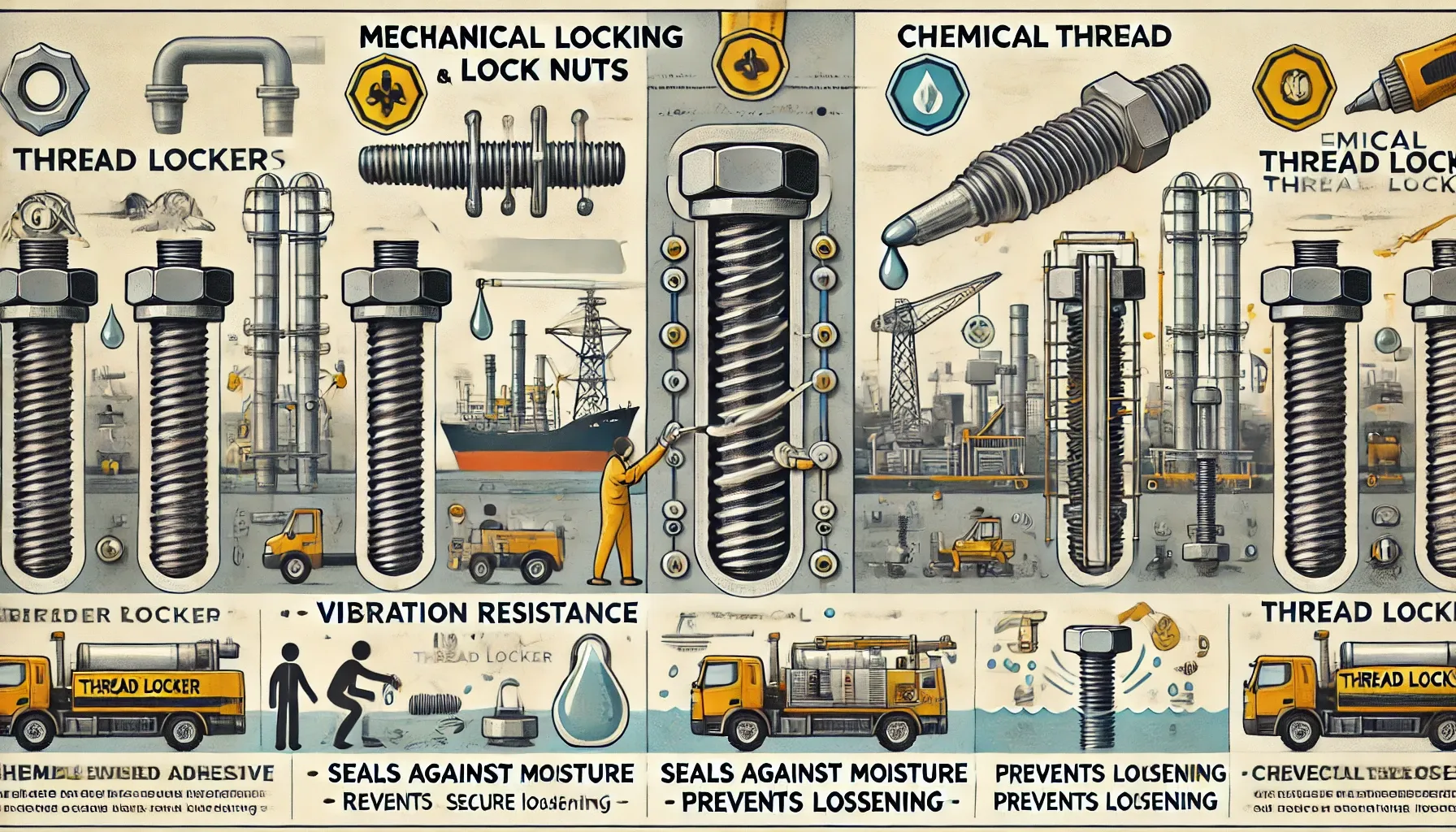
Thread locker is an example of a special type of adhesive compound that is designed in liquid or gel like form with the aim of putting on the threads of blots, screws and studs prior to the assembling. After the bolt has been secured, thread locker fills in all the gaps within the thread interface and afterwards cures establishing a tough bond that withstands loosing from vibration, thermal cycles or shock.
Unlike mechanical locking techniques that rely on friction and physical locking, like spring washers, lock nuts, and double-nutting, thread lockers cement the bond between the threads from the inside. This construction makes vibrations almost impossible to loosen the bond.
After thread lockers have cured, they are able to also seal the fastener threads, preventing moisture, corrosion, or other chemicals from penetrating and further increasing the fastener's life and preventing rust seizure.
Different Strength Levels of Thread Lockers Based on Application
Thread lockers vary in strength grades based on the required permanence or removability of the fastener. Low-strength thread lockers are reserved for smaller screws or parts that require easy disassembly, such as instrumentation fittings or electronic panels.
Medium-strength thread lockers dominate the industrial maintenance market and are used for machine bolts, flange connections, bracket supports, and general assembly. This type allows for some controlled disassembly with standard tools.
Permanent or high-strength thread lockers are used in critical parts of structural joints, heavy machinery, or safety gear that is not intended to be removed frequently. These kinds of joints have a very strong bond and special tools or heat is required to separate them.
For ease of maintenance and replacement, using Thread Lockers of too high strength in non-critical areas increases complexity during maintenance when they should be low-strength.
Why Thread Lockers Perform Better Than Traditional Locking Methods
A myriad of industrial sites still use spring washers, lock nuts, or even double nuts for slack prevention. However, these methods do not withstand the test of time when put through real vibrations.
Spring washers and lock nuts both have their issues, but the most notable flaw in the double nut design is that while it surely increases assembly time, there is no guarantee that it can withstand dynamic vibrations.
By eliminating the gap in between the threads and exercising complete control over micro-movement, Thread Lockers address the very problem of loosening. This enables them to surpass mechanical locking systems in almost every environment - be it high-vibration, high-temperature, or chemical ones.
Where Thread Lockers Are Mandatory in Industrial Applications
Thread lockers are not mandatory in every condition, but there are specific industrial zones where they prove their worth time and again. Pumps, compressors, PA screens, conveyors, rotating and rail mounted equipment, crane assemblies, and vehicle mounted structures are all optimal examples of thread locker volume increase.
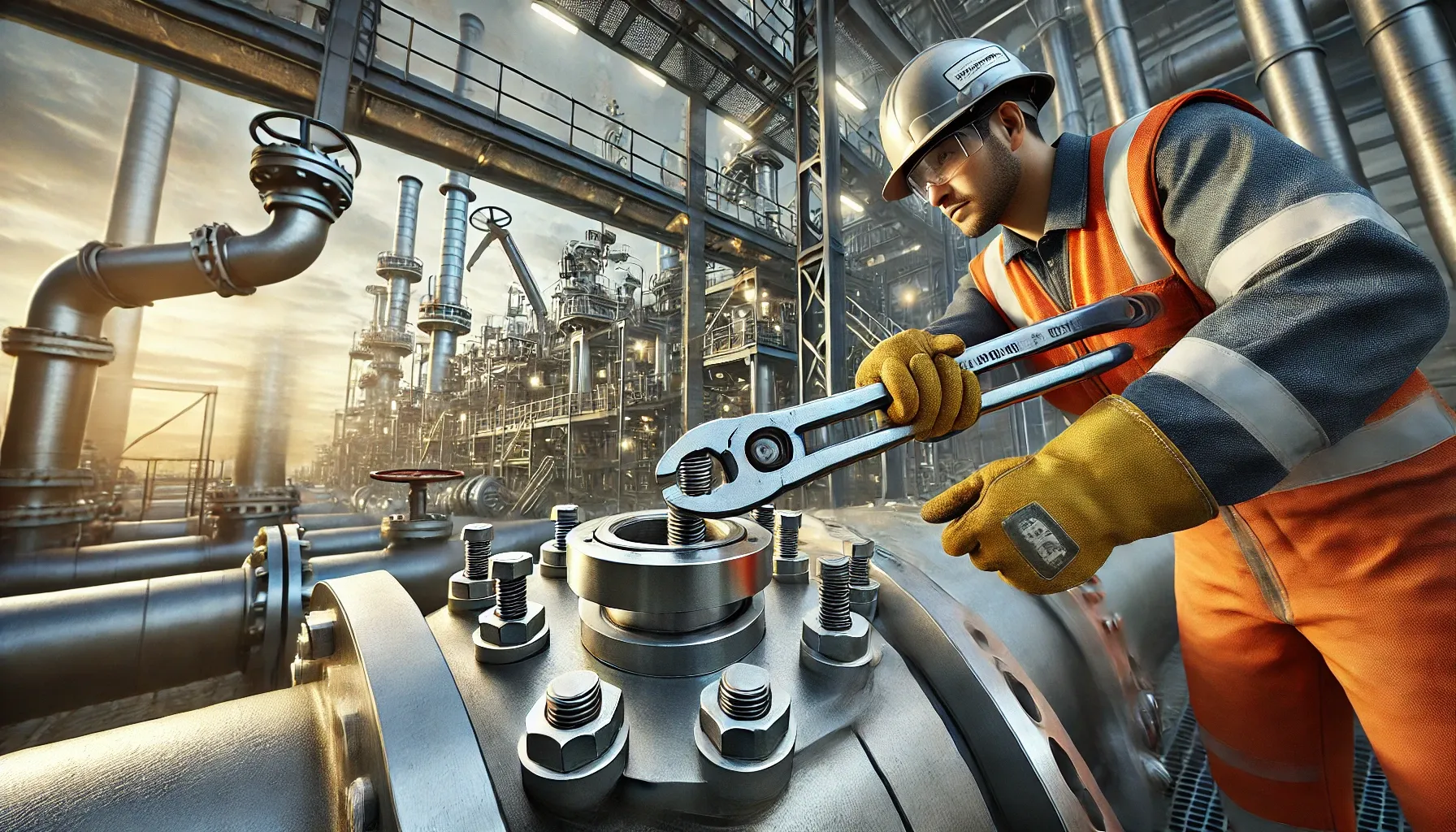
Thread lockers must be applied to the studs of steam, gas, water and chemical pipelines which carry vibration to prevent the back-out of the bolt and leakage.
Dynamic load supports, structural brackets on moving platforms, instrumentation control panels, and almost any control panel with vibration is also secured with thread lockers for the prevention of safety.
Conclusion
In factories, thread lockers are more than adhesives: They constitute a safety layer against fastener failure due to vibration. If operations in the plant are suspended, the enterprise will suffer financial difficulties, heightened safety risks, or productivity losses. That's why, in operational terms, thread lockers really aren't an expense, but a vital ally in reliability.
Indusroof offers a full line of industrial grade thread lockers for all types of applications. Whether these be light duty screws or bolts on heavy machinery, we can help ensure that all critical joints in your plant remain tight, safe, and vibration resistant under extreme operational conditions.
Validate your login