
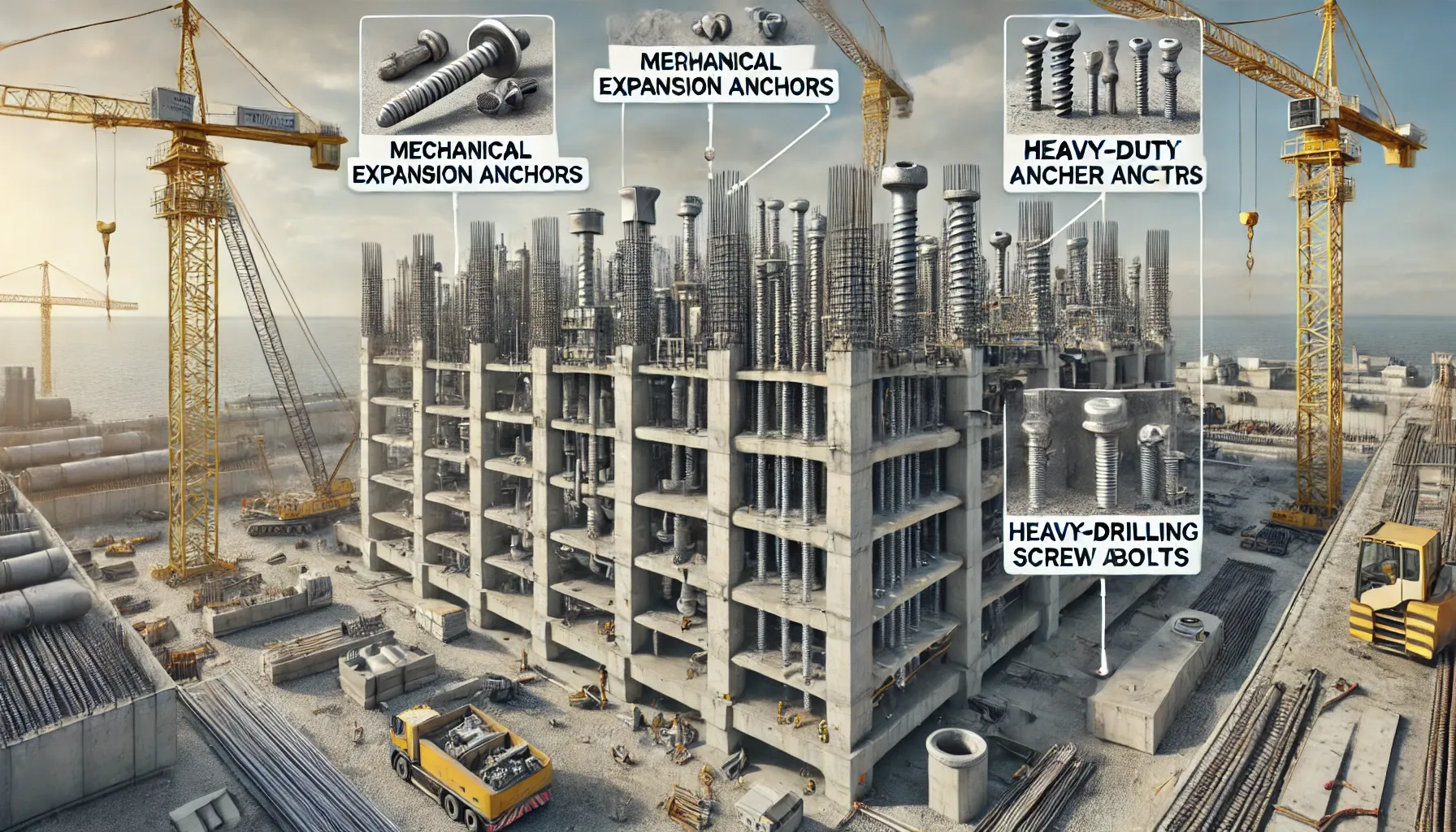
For any industrial project: a manufacturing plant, refinery, power plant, warehouse, or infrastructural site—RCC (Reinforced Cement Concrete) acts as the backbone of the structure. But for mounting heavy equipment, machinery, pipelines, HVAC ductwork, and even cable trays, support frames have to be fixed onto the RCC. The true champions in this case are industrial anchors. While they might seem like mere accessories concealed within boxes of concrete, in reality, anchors are the most crucial joints of any construction serving the interface between static reinforced cement concrete (RCC) structures and mechanical loads which possess the ability to change. The impact of choosing the wrong type of industrial anchor may seem trivial for design at first glance. In reality, it results in the invitation of disaster, structural collapse, erosion, irretrievable damage when severe vibrations, seismic activity, high pull-out forces, extreme loads, or even some combination set-in.
Why Industrial Anchors are Lifelines in RCC Structures
Without doubt, RCC is strong; but is also fragile handling point load and sudden dynamic forces through bolt-performed operations. Industrial anchors serve as a connection link to steel structures or equipment with the RCC base as the interface. Distributing the entire force and providing safe execution of the resultant forces tension, shear, pull-out, and even the shock caused by vibration.
Every variety of anchor has a unique method for gripping or bonding with the concrete. Some make use of expansion force, some use chemical bonding, and others rely on thread engagement, or mechanical locking. The type of attachment selection is entirely based on the load type, direction of force, nature of RCC (cracked and non cracked), environmental exposure, and available range of installation flexibility.
Mechanical Expansion Anchors – The Industrial Standard for Static Loads
For Industrial RCC fixing, versatile anchors such as mechanical expansion anchors are some of the most popular. This is because they expand into the drilled holes as torque is applied, and press against the fracture thereby locking in. They are extremely reliable for static loads like equipment bases, platforms, handrails, as well as supporting HVAC ducts and other equipment.
Straightforward ease of installation and solid holding strength immediately after fixing makes expansion anchors as popular as cable trays. They are, however, rough on drill precision, clean hole preparation, and torquing care. This is where expansion screws that come in sleeve, wedge, or bolt variation shine. Precise drilling and care during torquing is an absolute must as over-tightening can crack the concrete while under-tightening the bolt will reduce the holding strength.
In seismic active regions expansion anchors are used carefully in combination with anti-vibration washers or locking systems to prevent screws from loosening over time in vibration prone locations.
Chemical or Resin Anchors – The King of High Load & Dynamic Conditions
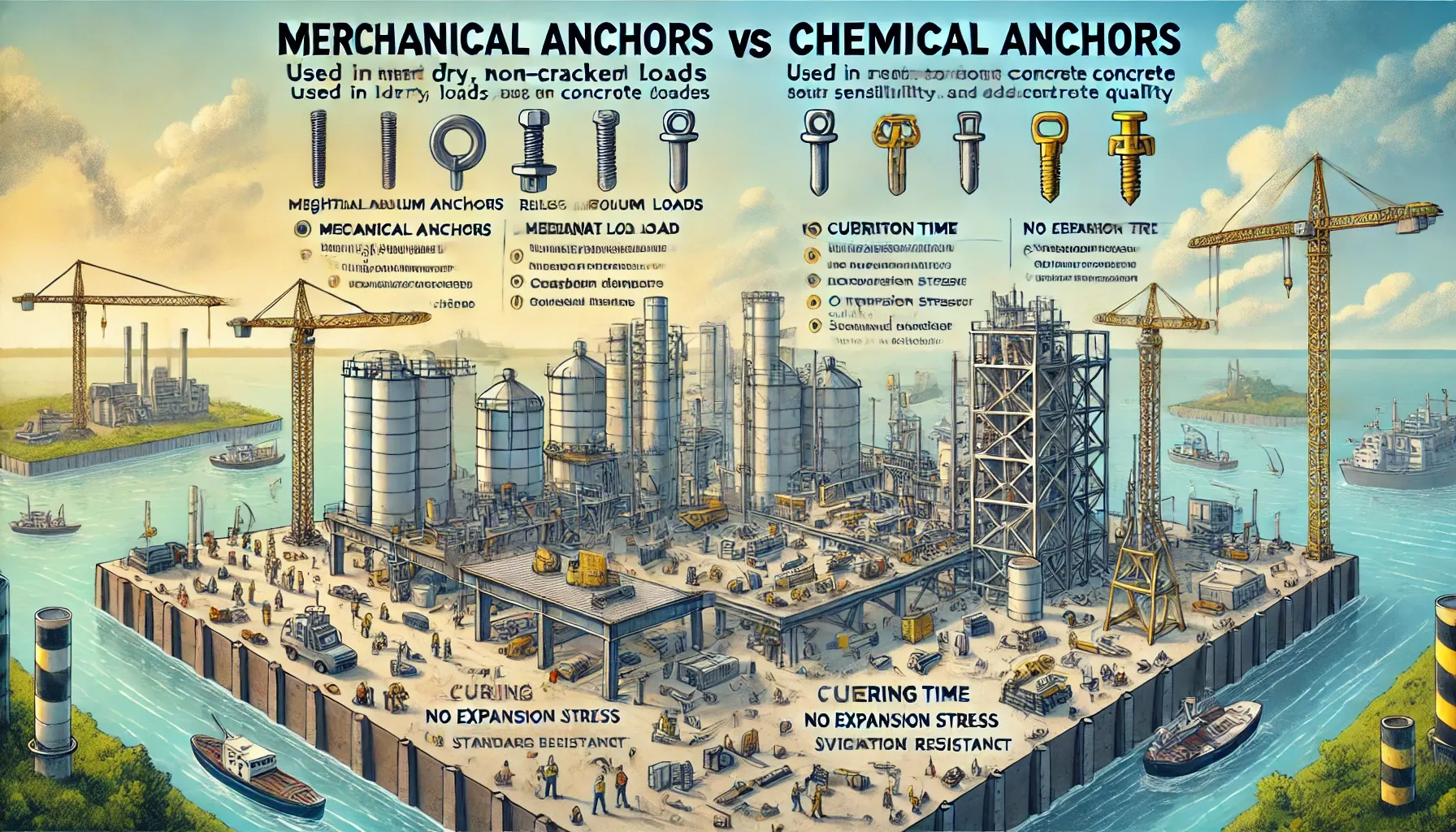
Industrial designers first turn to chemical anchors for consideration when their application involves high tension, shear, dynamic vibration, or even cracked concrete. These anchors feature a unique struggle of two component resin which practically welds the threaded rod or rebar placed into the RCC hole, thereby forming an exceedingly powerful chemical anchor.
Their performance is unrivaled when mounting structural steel, large bases of stationary equipment with reverse loading, overhead and heavy seismic load zone installations. Chemically bonded anchors also offer the greatest freedom of adjustment in hole depth and diameter.
These anchors require time to set and cure, which is their only limitation. However, once they do, they far exceed any other anchor's load bearing capabilities in the entire industrial market.
Heavy-Duty Anchor Bolts – The Permanent Solution for Base Fixing
These bolts take care of critical equipment that are installed onto pre-cast concrete for foundations, and absolutely guarantee vibrational resistance, heavy load tolerance, and long lifetime. They are almost always casted into the RCC or placed later through chemical anchoring.
Anchor bolts are particularly good at resisting pull-out failure because of their design, length, and sometimes even hook or bend at the end that is embedded. They are used as standards for fixing large machinery, pumps, generators, structural columns, or any other setups that have static weight, as well as dynamic load.
The right anchor bolt caters to checking RCC thickness, type of load, depth of embedment, and need for corrosion resistance based on environmental exposure.
Self-Drilling or Screw Anchors – The Quick-Fix Masters for Medium Loads
Screw anchors of self-drilling type have gained traction with medium duty applications like MEP supports, racking systems, light duty cable trays, or suspended ducting in industrial projects. These anchors do not need expansion or chemical resin because they cut thread themselves in RCC holes.
For projects that are bound to work on a tight deadline, or low load applications, these anchors are super-fast to install, and provide immediate load bearing capacity. Yet, their performance is dependent on the strength of the RCC, as well as the quality of the hole preparation.
While they are not recommended for critically dynamic or very high load bearing applications, they can still be useful for non-critical repetitive small fixings in an industrial setup.
Choosing The Right Anchor — The Real Site-Level Engineering
Anchor selection is never about what looks easy or cheap. It is a decision that needs pure technical engineering based on:
- Load type — static, dynamic, vibration
- Force direction — tension, shear, combined
- RCC quality — cracked, non-cracked, old concrete
- Installation environment — dry, wet, chemical exposure
- Safety factors — critical or non-critical applications
An error in selecting anchors can lead to dire consequences such as; failure of anchorage, structural damage, falling equipment, safety risks, and exorbitant repair costs.
Conclusion
Although industrial anchors in RCC structures may appear insignificant, their contribution on a site-level is immensely crucial. They integrate the formidable strength of concrete and dynamic strains of industrial forces. Selection of an appropriate anchor entails more than simply attaching something to a floor or wall. It is in fact, a crucial decision towards ensuring multi-directional trust, long-term reliability, and safety on critical installations.
At Indusroof, we offer a vast portfolio of industrial anchors which includes expansion and chemical anchors, heavy-duty bolts, and screw anchors all accompanied by proper technical support to ensure verified selection, site-specific load calculations, and application tailored to the needs of the structure for rock- solid supporting where, operational stress, weight, and time stand defied.

Validate your login