
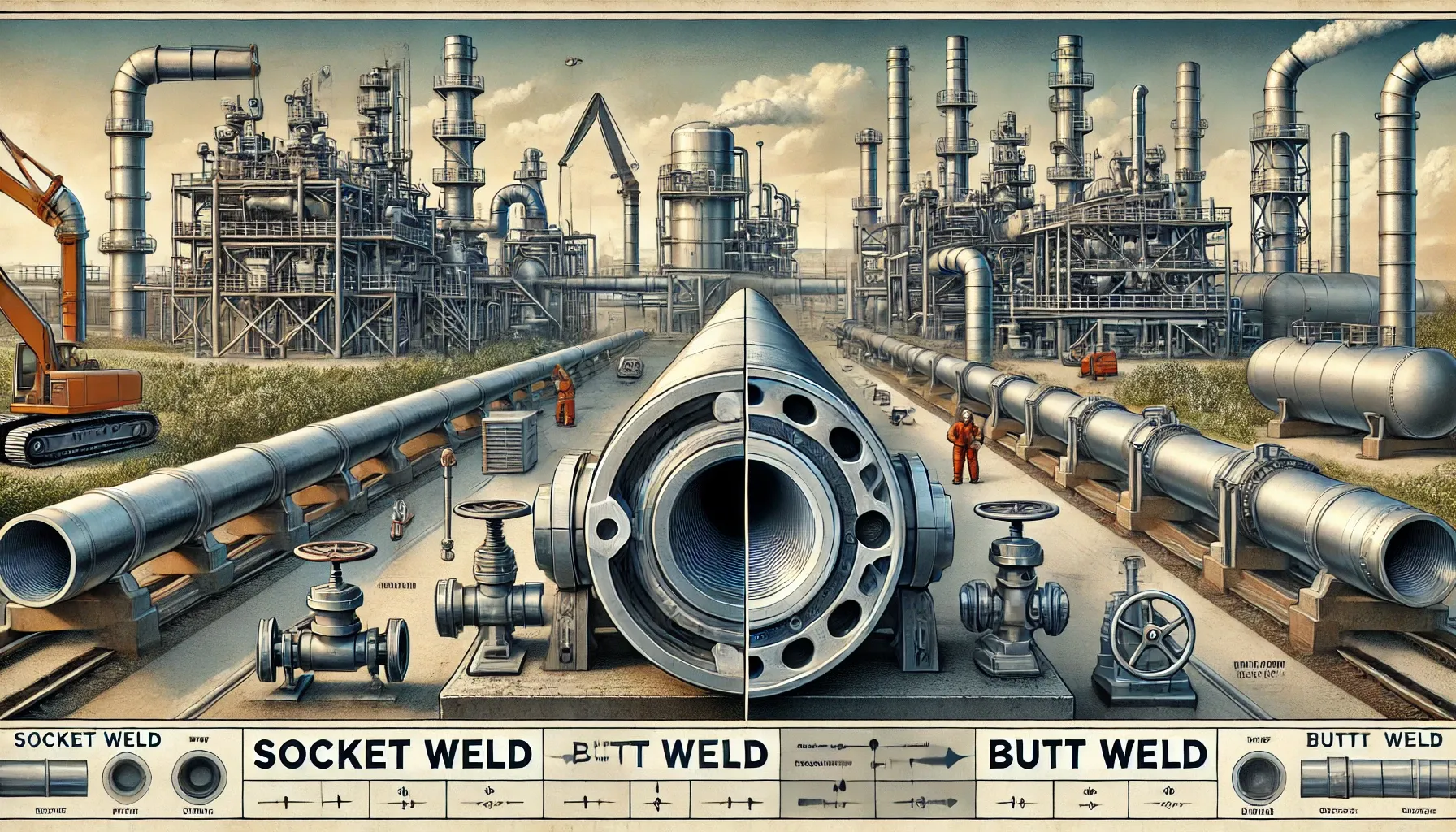
Within the pipe industry, anything ranging from refineries to power plants, chemical factories, and even offshore rigs exhibit high temperatures and pressures. These environments can be brutal. In fact, every single joint in a pipeline can become a weak point. This is the case for both butt welders and socket welders. These two welding methods are in constant competition for multi-purpose use because both have their pros and cons. But what is the truth? As we know, there are a myriad of stresses, pops, and even vibrations occurring in industrial pipelines constantly. It is clear that harsh conditions exist. Although, one truth prevails. Only the right joint will withstand this immense thermal expansion, pressure shock, and even dynamic loading.
What Exactly is Socket Weld and Where it Dominates
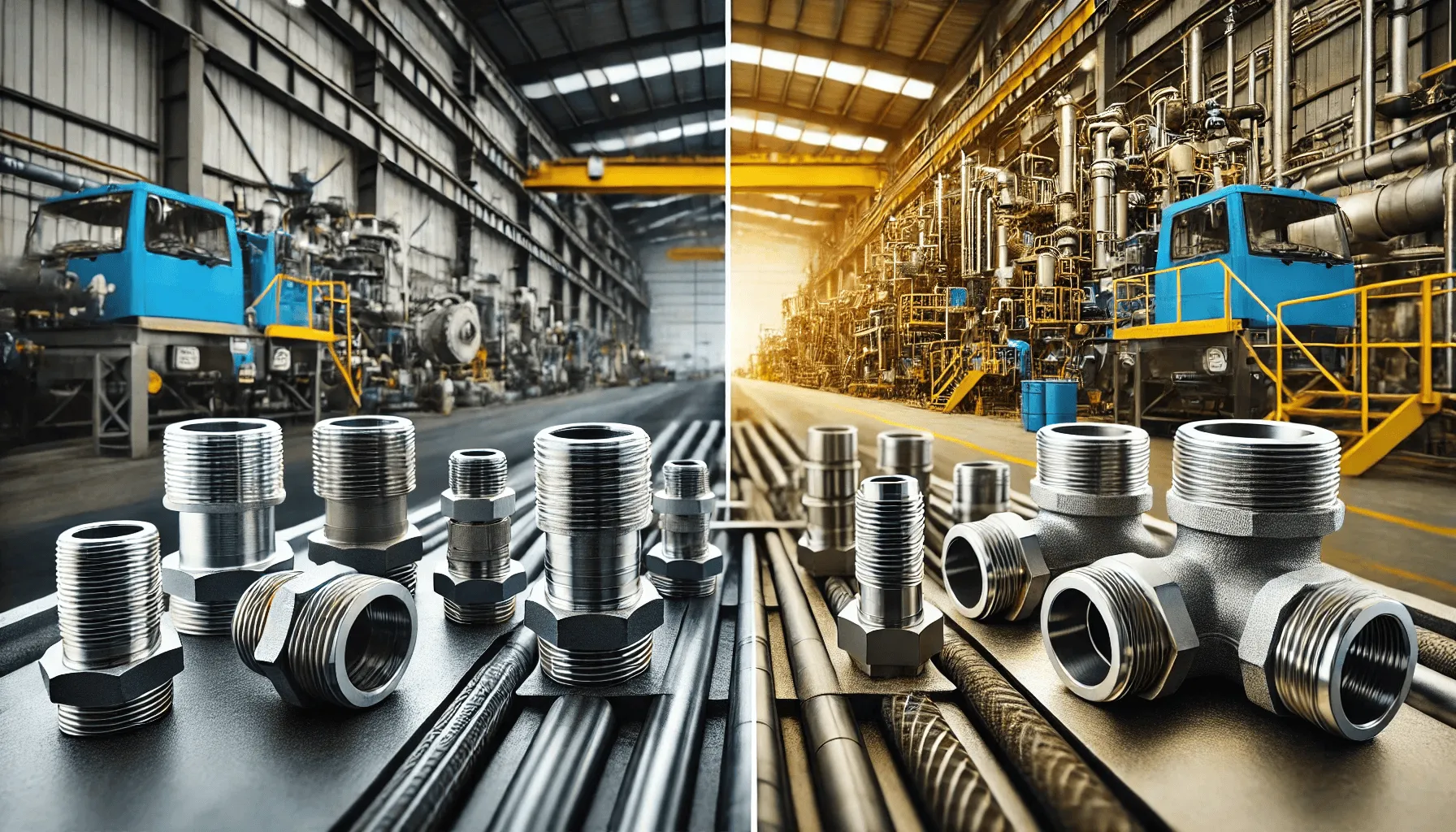
Most commonly used for pipes up to 2 inches or 50 NB in size, socket weld is a powerful joining method. Socket weld creates strong connections which are completely leak proof and do not require the accurate preparation of the pipe end. There is no beveling needed either. This method is also simple as well as effective.
The most notable advantage of socket weld joints is the relative ease of alignment and the overall simplicity during the surface preparation of socket welds. This makes them a common option in situations where the pipelines are carrying non-critical fluids, or where fluids are not damaging, not dangerous, and non-toxic, and are contained in smaller, yet still strong, pipes.
A few cases of industries that make use of socket welds with lower temperature but greater than ordinary pressure are in the hydraulic piping system, in the steam tracing line, and in lube oil line along with those in other utility pipelines within the plants. Their capacity of withstanding vibration and better handling of misalignment in small pipe sizes is definitely an edge in operations.
But like most types of joint methods, socket weld joints also have their weaknesses, one of them being crevice corrosion. Due to the very small space between the pipe and the fitting located in the socket, there is a possibility of fluid stagnation which increases corrosion risk, particularly in aggressive or caustic fluids, or when under high temperatures. This is the reason socket welds are not preferred with aggressive chemically active fluids or extreme ultra-high temperature pipelines.
Butt Weld — The King of High-Stress, High-Spec Piping
Rightfully so, butt weld is the archetype of industrial butt welding as it pertains to large diameter pipes, critical fluid passages, and systems featuring high pressure and temperature. A butt weld is a full penetration weld joint and results in both ends of the pipe being beveled and weld along to the full thickness.
The butt weld joints provide the greatest strength of all other types of weld joints. Their strength stems from providing smooth flow without any internal pockets or turbulence regions.
Butt weld is the ultimate winner in the high-stress winners such as: high-pressure steam lines, boiler piping, critical chemical lines, offshore oil & gas pipelines, and nuclear plant piping because of its unparalleled strength and mechanical properties.
Butt weld joints have a higher requirement when it comes to skill and demand better pipe prep work, precision alignment, quality control, and stringent controls. Weld integrity is regularly checked through Radio or ultra-sonic testing. Despite the increased cost and time associated with welding it in comparison to socket welds, the value in life cycle cost and reliability is unmatched.
Site-Level Factors That Decide Socket Weld vs Butt Weld
In industrial practice, piping diameter serves as the default basis for the socket weld and butt weld decision. Above two inches, the pipe diameter butt weld is preferred because of better handling of stress, flow conditions, and long-term reliability.
Service fluid is another critical factor. For steam pipelines, highly corrosive chemicals, and stagnation- and deposit-prone fluids, it is best to use butt welds because of the exposed internal surface.
Also, pressure and temperature class are contributing factors to the weld type choice. Extremely high-pressure systems, or high-temperature zones, tend to shift towards butt welding due to better stress distribution.
Site conditions, piping accessibility, and future maintenance considerations have an impact as well. For congested areas, socket weld might be preferred for ease of fabrication concerning small bore piping. But, in critical production lines, butt weld is the more reliable option.
Lastly, but also very important, is the factor of cost. Socket weld joints are less expensive concerning labor and fitting costs for small pipes, while butt weld joints guarantee safety in the long run due to the more expensive fittings, higher skilled welders, and increased testing required.
Conclusion
Welds of sockets and butt-welds are not purely technological choices for a business; they are critical to survival when it comes to a high-stress industrial setting. Socket welds have been a necessity for small, high-pressure utility lines, while butt welds are critical on the beast pipelines. Butt welds serve as the primary structure for vital pipelines without compromising on strength or safety.
Indusroof supplies both socket welds and butt welds along with the necessary technical support from certified manufacturers. Our knowledgeable advisors help guide industries make the correct welding choices for specific joints keeping in mind that every junction should be able to withstand a plethora of stress for extended periods.
Validate your login