
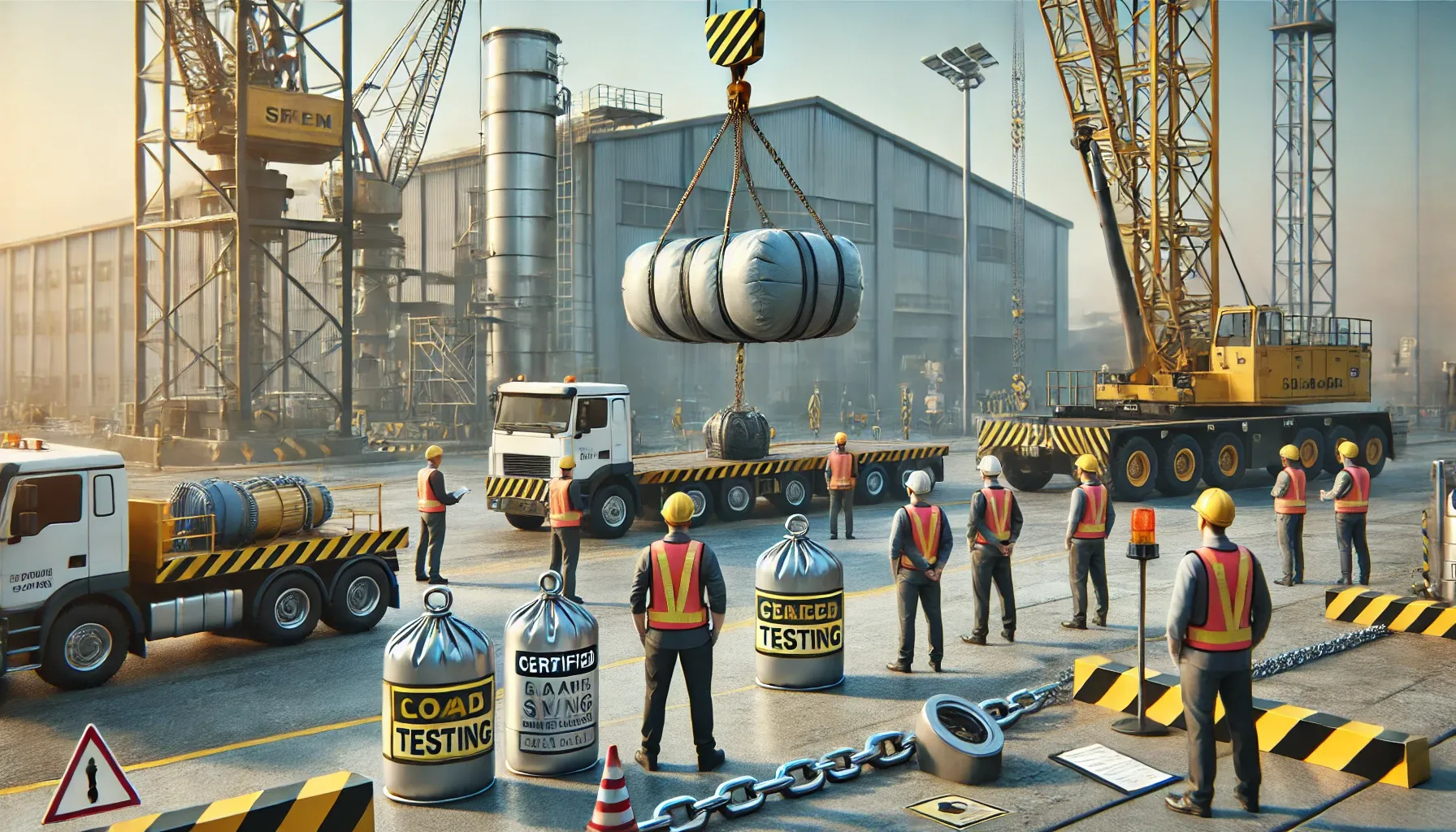
Lifting equipment requires accuracy in maintenance and operations. Little errors at this stage can cost the company significantly. All equipment requires slings, chains, wires, or spreaders which call for load testing to determine if they effectively perform their functions. The latter also defines if the mechanisms can carry the rated load in question. Testing must be carried out as a regulation for safety and to minimize the risk of horrendous accidents brought by gear faults.
What Exactly is Load Testing and Why it is Done
Load testing is the procedure of applying controlled overloading to structural components and devices (like cranes) beyond their normal work capability in a safe manner to ascertain their integrity, strength and reliability. The refusal to use further checking systems overcome this overwhelming force. The strategy is simple: perform the most severe test possible to find out whether the added burden would lead to any deformation, cracking, or undue failure. Manufacturing plants, construction sites, oil and gas fields, ports, and warehouses, power plants are some of the areas where lifting operations with cranes and other equipment are conducted on a daily basis. Load and static weights can reach staggering heights and are not only dynamic but exert unpredictable forces on the working environment. Even the best and the most sophisticated lifting gear undergo severe stress due to wear and tear, rough handling, weather and repeated overloading incidents. This leads to the weakening of the equipment which could become more difficult to repair later. Testing prior to full-scale application known as realtime lifting can determine in advance whether these weak areas are present and put the equipment and operators at risk during service.
Different Methods Used for Load Testing of Lifting Materials
How load testing is done relies critically on the focus of the specific test. In vertical lifting cranes, hoists, and other lifting equipment, either dead weights or water bags are commonly used to apply the test load. In modern years there has been an increase in the use of water bags as they are safer to use at height because they give more control of the weight by changing the water volume.
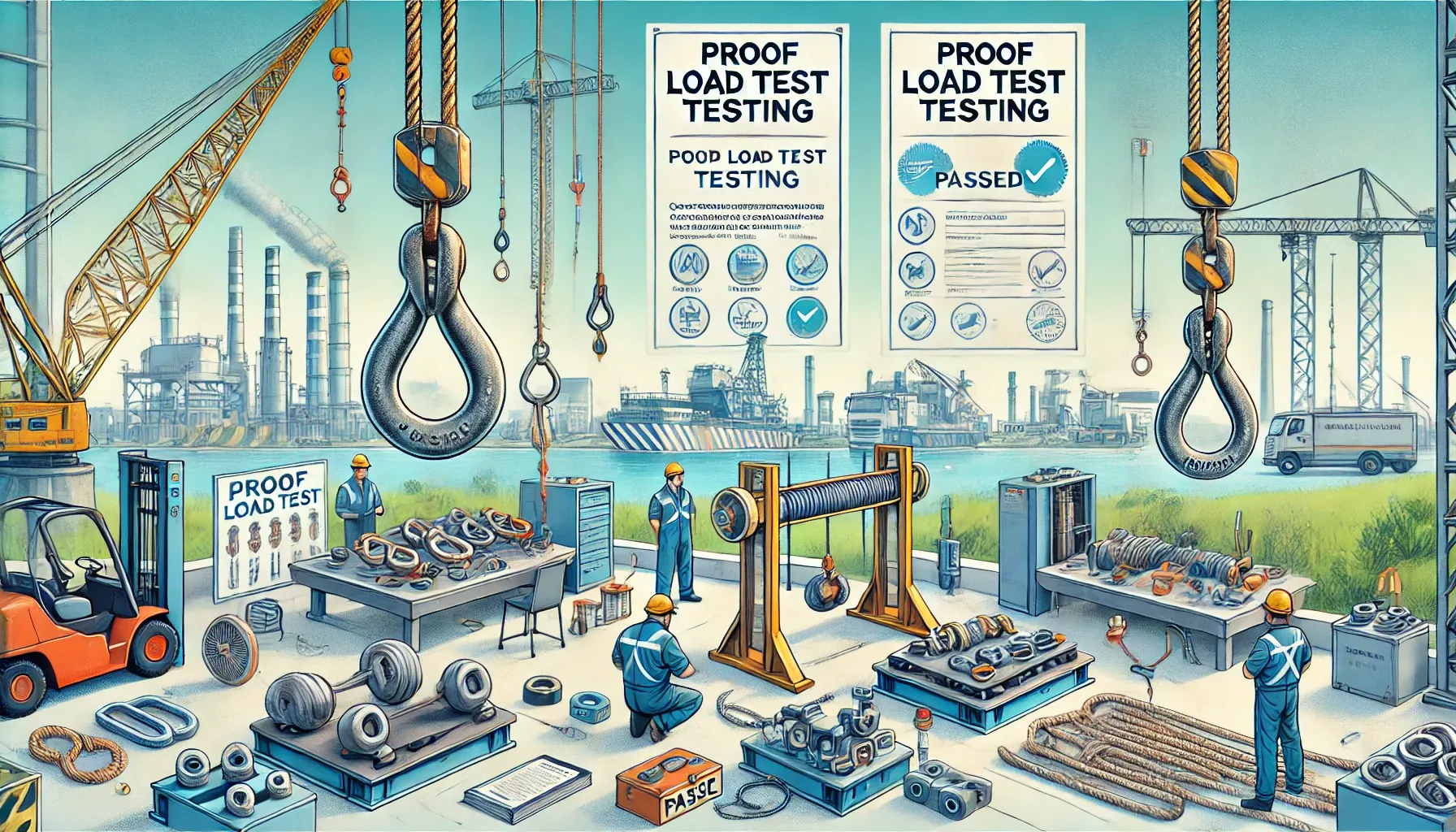
With slings, chains, and shackles, the most common method used is tensile testing using hydraulic pull machines where the lifting gear is loaded and stretched under controlled loading conditions up to predetermined test load. For certain spreader beams, lifting frames or lifting devices such as clamps and grabs, static load testing is performed using certified weights which are suspended on the devices under test for a set period and observing whether permanent deformation, bending or weld cracks occurs over time.
In dynamic load testing, the load is also applied, moved, and rotated to mimic actual operating conditions such as swinging and shifting of loads during use. Other more sensitive components are subjected to non-destructive load testing of ultrasonic inspection, magnetic particle inspection, or dye penetrant inspection of invisible cracks, surface flaws, or material defects on the inside of the components.
Standard Frequencies of Load Testing in Industrial Practice
According to the safety regulations and legal stipulations of India, lifting devices must undergo load testing prior to commissioning. Post-commissioning, the rule of thumb for load testing is once every year for the majority of lifting equipment, although some do require deviations depending on the frequency of use, environmental factors, and criticality of the equipment.
In ports, shipyards, offshore construction platforms, or heavy construction zones where there is frequent lifting of heavy loads, testing is done on a bi-annual basis. If the equipment has been altered, repaired, overloaded, or subjected to anything outside the norm, retesting is strictly mandatory irrespective of when the last exam was conducted.
Softer controls are exercised for lifting equipment used for handling people, like personnel lifts and man-riding baskets. These are tested for load more frequently, and it is recommended they be done every three to six months, primarily due to safety concerns.
Legal Compliance and Safety Regulations for Load Testing
Load testing of any lifting equipment in India is regulated through ‘The Factories Act, 1948’ and the state specific ‘Factories Rules’, in conjunction with safety instructions by various bodies such as the Directorate of Industrial Safety & Health. These rules state that load testing must be carried out by competent persons or agencies sanctioned by the respective state government bodies.
All lifting equipment must possess a test certificate which is valid and formade after successful load testing, detailing the load that was applied, the date of the test, the next due date, the equipment identification number, and the signature as well as the license number of the competent person. Such certificates need to be stored on the site and made available during safety checks, audits or any incident investigation that is held.
Not adhering to the norms for load testing can result in dire consequences like the imposition of heavy fines, cancellation of factory license, not receiving insurance claim, and criminal charges if any accident occurs due to the lifting gear failing without proper load test records.
Conclusion
In the industrial sector, load testing lifting equipment is not a mere technical procedure, it serves as an unmistakable ‘reality check’. Despite what branded or top-notch quality lifting gear you may have, if a periodic load test has not been executed, it cannot be trusted with operational loads. Equipment is subjected to abuse, environmental deterioration, and careless handling on a daily basis. The only way to guarantee that the machinery is indeed in serviceable condition and does not pose a risk to your employees is through load testing. Indusroof provides certified lifting equipment and, in conjunction with approved agencies, offers authorized load testing services, so that your lifting operations are not only technically compliant but also legally safe, providing you with complete peace of mind.

Validate your login